
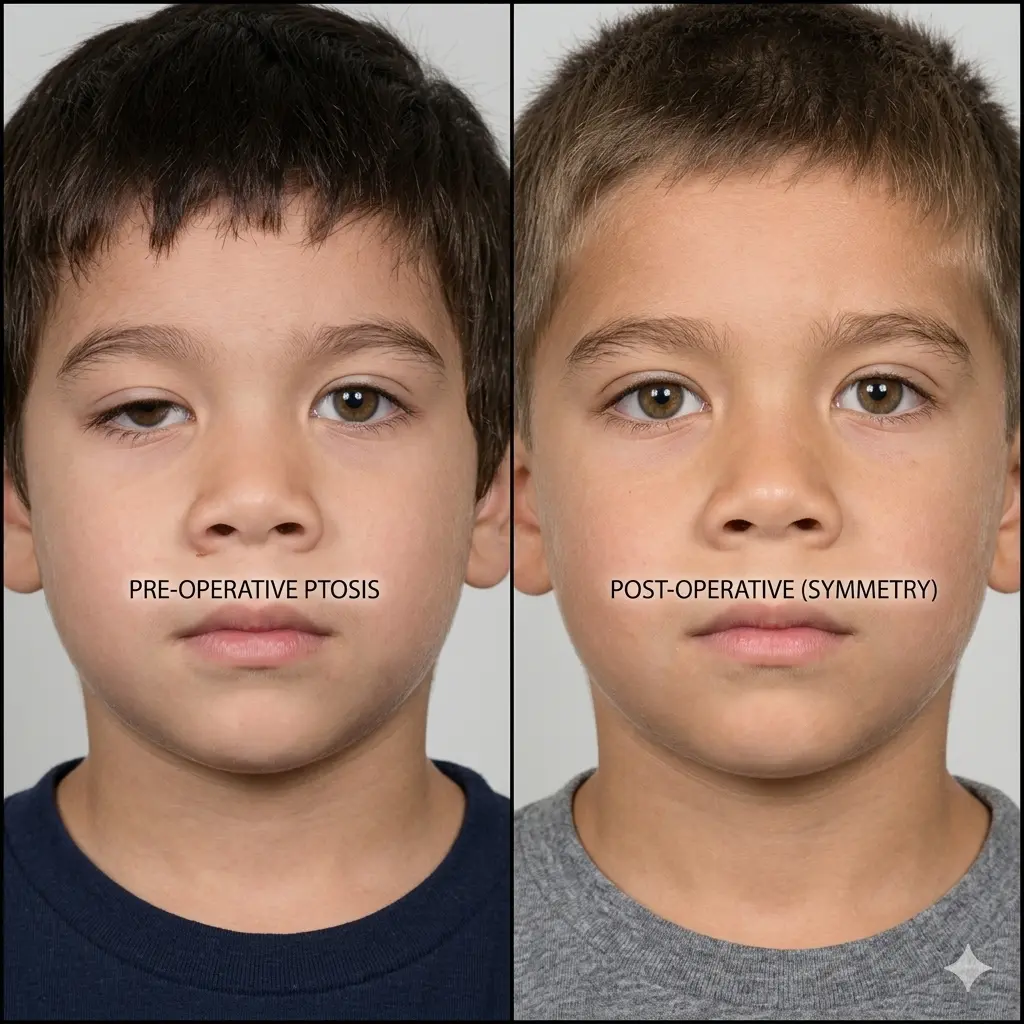
Lazy Eye
Lazy eye, medically known as amblyopia, is a condition in which one eye has reduced vision even though there may be no obvious structural problem in that eye.
Because the brain “favours” the stronger eye, it gradually pays less attention to the weaker eye, which can cause that eye’s vision to fall behind.
Lazy eye usually develops in early childhood while the visual system is still growing and learning how to see.
If not treated in time, the weaker eye may never develop clear vision, even with glasses or contact lenses later in life.
First eye examination of child
Infants should have an eye examination within the first three years of life. It is best to schedule the visit when the child is usually calm, alert, and in a good mood.
Service List
Primary Care
LASIK Eye Surgery
Glaucoma Services
Paediatric Ophthalmology
Lazy Eye
Cornea Services
Cataract Service
Squint Service
Preparing Child for the First Checkup
It is advisable to demonstrate & explain to the child what will happen during a vision check-up. This will help to reduce any anxiety your small child might be experiencing. It also helps to learn about your child’s specific fears and concerns so that you can take corrective measures ahead of time.
Act out some of the procedure to guess the worries that your child might not be able to articulate.
Reassure your child that you will be there with him or her during the entire procedure.
Make your child realize that the check-up is not a punishment but rather a way to guarantee the healthiest vision possible.
Respect the wishes of an older child who might not want you to be present during the procedure. Privacy is important to adolescents and should be protected.
Inform your eye doctor if you have a family history of eye problems requiring vision correction, such as nearsightedness or farsightedness (refractive errors), lazy eye (squint/weak eye), or eye diseases.
Psychological Problems with Undiagnosed Vision Problems
Children who have undiagnosed vision problems can suffer from low self-esteem because they have trouble concentrating on reading, feel stupid, experience frequent headaches, or rub their eyes . Once their vision is corrected, children with eyeglasses hold their heads high and exude confidence—if their parents are positive and supportive.
Making Child comfortable with Spectacles
The child needs to have a nice feeling after wearing specs. Thin, lightweight plastic and photochromic lenses, and so many neat frames, can make your child feel enthusiastic about wearing glasses to emulate older kids or express an individual sense of style.
- Make certain that your child feels a part of the frame selection process. Nothing is more important in terms of getting children to wear their glasses and take better care of them as well.
Protecting Children’s eyes from sun
About 80 percent of a person’s lifetime sun exposure occurs before the age of 18. Photochromic lenses, which change from light to dark when ultraviolet light is present, have an eye health advantage by providing 100% protection from harmful UV rays and glare. And they do it automatically, which eliminates the need for kids to keep track of two pairs of glasses — regular glasses and sunglasses
Common Eye Problems in Children
Eye tests and general examinations often are conducted to detect the possible presence of these types of eye problems commonly found in young children:
Lazy eye (amblyopia)
Your child’s eyes should be examined for early detection of vision problems such as lazy eye or amblyopia, in which one eye is weaker than the other in other words the vision in eye is lesser than normal Lazy eye can occur due to presence of glass number (refractive error) or squinting of eyes. With amblyopic, using glasses always help to improve vision of the patient.But sometimes amblyopia treatment may include eye patching to strengthen the weaker eye
Misalignment of eyes (strabismus)-
Crossed or misaligned eyes can have different causes:
- Problems with muscle control in the affected eye or eyes. If strabismus persists in young children, a condition known as lazy eye or amblyopia can develop along with related vision problems
- Inability to maintain alignment of both eyes for correct focus as distant objects move nearer (convergence insufficiency)
Foucusing(accommodation), color vision, and/or depth perception problems
The eye doctor may also test your child’s focusing ability. The child’s depth perception or ability to gauge distances between objects may also be examined. Color vision may be tested through methods such as placing a dot pattern of symbols within a pattern of dots made up of other colors. General eye and eyelid health
To assess a child’s general eye health, the eye doctor will examine his or her eyelids and lid margins, looking for shape irregularity and discharge on the lashes or lid margins. The eye doctor may turn the lower lids inside out (evert) to look for abnormal or infected eyelash follicles, bumps (papillae), discharge, and swelling. Your eye doctor may examine the cornea,iris& lens to look for cloudiness (opacities) or other irregularities.
Signs of Vision Problems in a child
|
|
send a message
Send Us A Message Anytime.
+91-7088103502
Have questions about your eye health? Send us a message today! Our expert eye care team is here to guide you with personalized advice, quick support, and trusted solutions. Your vision matters—reach out now and let us help you see the world more clearly.
Need a Doctor for Check-up? Call for an Emergency Service!